

Table of Contents
- What Is Perfume Concentration?
- The Difference Between Parfum and Eau de Parfum
- How Perfume Concentration Affects Longevity and Sillage
- How Long Does Eau de Toilette Last?
- How to Make Perfume Last Longer on Skin
- Choosing the Right Concentration for Your Needs
- Concentration Comparison Table
- Frequently Asked Questions
Last Updated: September 27, 2026
What Is Perfume Concentration?
Perfume concentration refers to the percentage of fragrance oils dissolved in alcohol and other carrier solvents. This percentage directly determines how strong a fragrance smells, how long it lasts on your skin, and how much you'll pay for the bottle. Understanding concentration levels is essential if you want to build a fragrance collection that actually works for your lifestyle and budget.
The fragrance industry uses standardized concentration tiers, each with distinct characteristics.
The Difference Between Parfum and Eau de Parfum
Parfum (also called Extrait or Pure Perfume) contains the highest fragrance oil concentration, typically between 20-40%. This is the most potent format available to consumers. A single spray or dab delivers intense scent projection and longevity that can last 8+ hours on skin, sometimes reaching into the next day.
Eau de Toilette vs. Other Formats
Eau de Toilette contains 5-15% fragrance oil concentration, making it lighter and more affordable than Eau de Parfum. The scent lasts 3-5 hours on average, which suits daily wear and professional environments where subtlety matters. Many people layer Eau de Toilette with other products to extend longevity, a technique we'll cover later.
Eau de Cologne and Eau Fraîche
Eau de Cologne contains 2-5% fragrance oil, making it the lightest traditional format. It was historically the standard in men's grooming and still dominates that category. Wear time is typically 1-2 hours, and the scent is subtle and refreshing rather than commanding.
How Perfume Concentration Affects Longevity and Sillage
The relationship between concentration and longevity is direct and measurable. Higher fragrance oil percentages mean more volatile compounds available to evaporate gradually, which extends wear time. A Parfum with 25% concentration will outlast an Eau de Toilette with 8% concentration by hours, sometimes by a full day.
Fragrance Oil Content and Scent Trail
The fragrance oils themselves are the active ingredient. Everything else, alcohol, water, and stabilizers, is carrier solvent. More fragrance oil means more olfactory molecules available to interact with your skin and the air around you. This is why concentration percentage is the single best predictor of how a fragrance will perform on your body.
Alcohol Evaporation and Wear Time
Alcohol is the primary carrier solvent in most fragrances, and it evaporates first. This is why the opening of a fragrance feels stronger than the dry down, the alcohol is carrying the volatile top notes, and as it evaporates, you're left with heavier base notes and whatever fragrance oils remain on your skin.
How Long Does Eau de Toilette Last?
Eau de Toilette typically lasts 3-5 hours on most skin types, though this varies based on skin chemistry, application method, and environmental factors. The 5-15% fragrance oil concentration means there's less scent material to work with, so longevity is inherently limited compared to higher concentrations.
How to Make Perfume Last Longer on Skin
Extending fragrance longevity requires understanding how scent interacts with skin. The goal is to trap fragrance molecules on your skin longer and prevent rapid evaporation. Several practical techniques accomplish this without requiring higher concentration purchases.
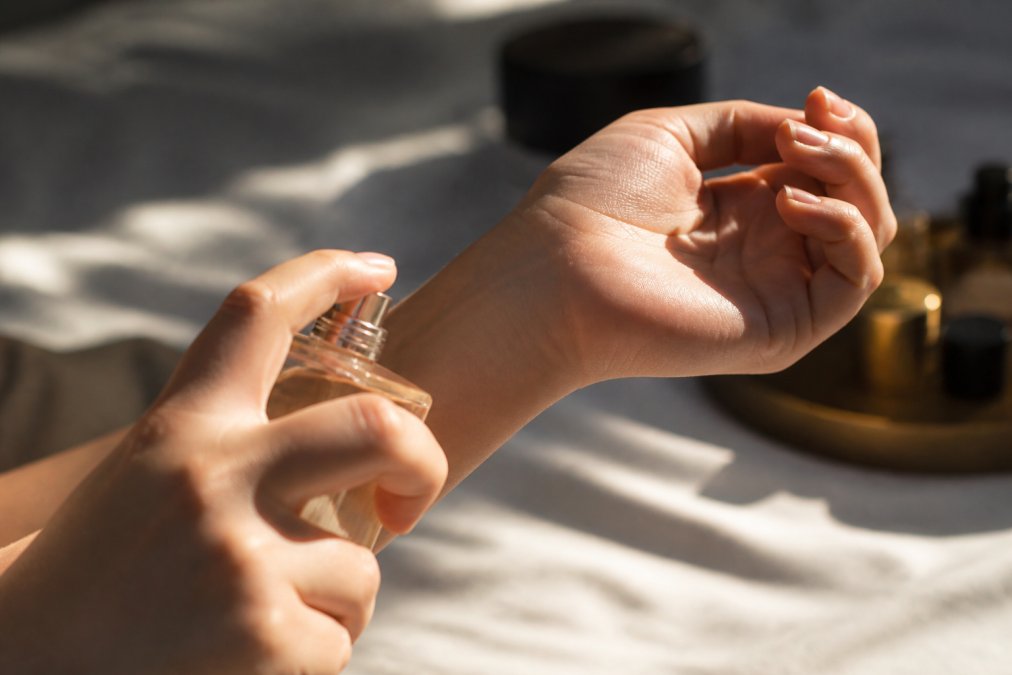
Layering Techniques for Maximum Longevity
Layering means applying fragrance at multiple stages of your routine to build scent depth and longevity. The most effective approach is applying an unscented or lightly scented moisturizer first, then spraying fragrance on top. Fragrance adheres better to moisturized skin, and the moisturizer creates a barrier that slows evaporation.
Skin Chemistry and Application Points
Fragrance lasts longest on areas of your body with higher blood flow and natural warmth. The inner wrists, inside of the elbows, behind the ears, and the base of the throat are ideal application points. These pulse points generate heat, which helps fragrance diffuse and last longer.
RDZ Pasión (Extrait) – Decant →
Choosing the Right Concentration for Your Needs
The "right" concentration depends on your lifestyle, budget, climate, and fragrance preferences. There's no universal best choice, only the best choice for your specific situation.
Seasonal Suitability and Daily Wear
Lighter concentrations suit warmer months and daytime wear. Eau de Toilette and Eau de Cologne feel fresh and crisp in spring and summer because they don't feel heavy on skin. In winter or for evening wear, higher concentrations feel more appropriate and luxurious.
Budget and Value Considerations
Parfum costs more per bottle but delivers better value per wear because you use less product. A 1.7 oz bottle of Parfum might cost double an Eau de Parfum of the same size, but you're using half as much product, so the cost per wear is often similar or better.
Concentration Comparison Table
| Format | Fragrance Oil % | Longevity | Sillage | Best For | Price Tier |
|---|---|---|---|---|---|
| Parfum/Extrait | 20-40% | 8+ hours | Strong | Evening wear, signature scents, full bottles | High |
| Eau de Parfum | 15-20% | 5-8 hours | Moderate to strong | Daily wear, niche fragrances, most collections | Medium-High |
| Eau de Toilette | 5-15% | 3-5 hours | Moderate | Daytime, office, layering, summer | Medium |
| Eau de Cologne | 2-5% | 1-2 hours | Light | Subtle fragrance, grooming, travel | Low-Medium |
| Eau Fraîche | <1% | 1 hour | Very light | Layering, refreshment, sensitive skin | Low |
Understanding perfume concentration levels transforms how you shop for fragrances. You stop chasing random recommendations and start making intentional choices based on your actual needs. Higher concentration isn't always better, it's just different. The best fragrance for you is the one that matches your lifestyle, climate, and preferences at a price point that makes sense.
Frequently Asked Questions
What is the difference between Eau de Parfum and Eau de Toilette?
Eau de Parfum contains 15-20% fragrance oil with a carrier solvent, typically lasting 4-8 hours. Eau de Toilette contains 5-15% fragrance oil and lasts 2-4 hours. The higher fragrance concentration in EDP makes it stronger, longer-lasting, and generally more expensive. Choose EDP for evening wear or all-day longevity; EDT works well for daytime and office settings where subtlety matters.
How long does eau de toilette last on skin?
Eau de Toilette typically lasts 2-4 hours depending on skin chemistry, application method, and fragrance family. Layering with matching body lotion, applying to pulse points, and reapplying mid-day extends wear time. Woody and oriental fragrances tend to last longer than fresh or citrus scents due to their heavier base notes and lower alcohol evaporation rates.
Does higher perfume concentration always mean better quality?
No. Concentration affects longevity and intensity, not quality. A well-crafted Eau de Toilette from a respected house outperforms a poorly composed Parfum. Quality depends on raw materials, perfumer skill, and fragrance composition. Higher concentration simply means more fragrance oil relative to alcohol, which increases cost and wear time, not necessarily olfactory excellence.
How can I make perfume last longer on my skin?
Apply to pulse points where body heat activates the fragrance: wrists, inner elbows, neck, and behind ears. Layer with unscented lotion or matching body cream to extend longevity. Avoid rubbing wrists together, which breaks down volatile compounds. Store fragrances in cool, dark places to preserve concentration. Consider higher-concentration formats like Parfum or EDP for extended wear, or try decants of premium niche options to test longevity before committing to a full bottle.
What concentration is best for office wear?
Eau de Toilette (5-15% concentration) or Eau de Cologne (2-5%) work best for office settings. They provide pleasant scent presence without overwhelming colleagues in close quarters. Fragrances with fresh, aromatic, or citrus profiles, rather than heavy gourmand or oriental types, read as professional. Test your choice in the office environment before committing; skin chemistry and ventilation affect how others perceive your fragrance's projection.
What is the difference between Parfum and Eau de Parfum?
Parfum (also called Extrait) contains 20-40% fragrance oil and lasts 6-12+ hours, making it the most concentrated and expensive format. Eau de Parfum contains 15-20% fragrance oil and lasts 4-8 hours. Parfum delivers maximum scent intensity and longevity with minimal application needed, a few spritzes suffice. EDP offers a balance of strength and value. Choose Parfum for signature scents you wear regularly; try decants first to ensure you love it before investing in a full bottle.
How does skin chemistry affect perfume concentration?
Skin chemistry, determined by pH, moisture levels, and natural oils, influences how fragrance oils interact with your skin. Oily skin holds fragrance longer because fragrance oils cling to natural sebum, extending longevity. Dry skin may cause faster evaporation, making higher concentrations (EDP or Parfum) more suitable. Test the same concentration on different body areas; pulse points with more blood flow activate scent faster and project stronger than other locations.
Should I buy decants or full bottles when exploring perfume concentration?
Start with decants to test how different concentration levels perform on your skin before committing to full bottles. Decants from Olfactory Outlaws, like the RDZ Pasión Extrait or Frapin 1270 Extreme, let you experience Parfum-level concentration at a lower price point. Once you've identified your preferred concentration and confirmed longevity matches your lifestyle, upgrade to a full bottle. This approach saves money and prevents purchasing fragrances that don't suit your skin chemistry or daily routine.